Step into streets that remember. Walking Through Time: Historical Tour invites you to wander, listen, and feel history underfoot—one story-packed stride at a time.
Setting the Pace Through the Past
Start with a period that sparks your senses. Do Roman arches, medieval bells, or industrial steam call your name? Pick one anchor era, then branch outward so each step reveals echoes, influences, and surprising through-lines that make your historical walk coherent and deeply memorable.
Setting the Pace Through the Past
Historical tours are not only about dates. Pause to smell bread near a centuries-old oven, trace tool marks on stone, and listen for market cries lingering in enclosed lanes. These sensory details stitch together time, transforming a map into a lived, walkable narrative.
Via Appia Antica Under Your Feet
Listen to the hollow knock of your shoes on basalt. The Appian Way once carried legions, merchants, and messengers. Every milestone marked distance—and ambition. Pause at tombs lining the roadside; they whisper private hopes along a public artery that never quite stopped beating.
Engineering That Endured
Notice cambered surfaces shedding rain, tight interlocking stones, and sightlines stretching impossibly straight. Ancient road building meant durability, predictability, and speed. As you walk, imagine carts groaning, sandals scuffing, and the relentless rhythm of trade setting a continent’s tempo for centuries.
Local Legends Along the Route
Ask an elder about a cracked step or a bend in the road. A roadside shrine may mark a lost traveler; a tree might commemorate a treaty. These micro-legends anchor vast history to personal memory, enriching your journey with texture and heart.
Markets, Guilds, and Everyday Lives
Spot narrow, deep plots that taxed by street frontage, counting-house windows with specialized shutters, and carved emblems revealing trades. A shoemaker’s last, a baker’s peel, a mason’s compass—these symbols act like business cards, turning a walk into a gallery of working lives.
Markets, Guilds, and Everyday Lives
Sip a spice-infused drink in a market that once handled cinnamon by the ounce and news by the whisper. Recipes survive in hands and habits; when vendors share a preparation tale, you taste a trade route’s ghost moving from distant shores into your cup.
Tracing Ramparts with Your Hand
Run your palm along rough masonry, then step back to see murder holes, bastions, and angled curtains. Defensive architecture is a grammar of urgency—every notch and angle a verb. Reading it aloud with your steps reveals how cities negotiated danger, season by season.
Listening in Wartime Silence
Enter a bunker and the air changes—dense, metallic, respectful. Imagine boots on steel grates, faint radio crackle, breath held between codes. Leave a moment of silence for untold names, then share a reflection in your journal to honor stories that never made headlines.
Ethics of Dark Tourism
Walk thoughtfully. Sites of suffering deserve care, context, and humility. Seek guides who center victims’ voices, verify sources, and avoid sensational photography. Invite discussion in the comments about responsible remembrance and how to balance learning with compassion on difficult ground.
Soundscapes of Devotion
Notice bells, chants, murmurs, and footfalls on stone polished by devotion. Even when empty, sacred places thrum with practiced silence. Ask a caretaker about the building’s daily rhythm; you may learn when sunlight turns a mosaic into a brief, golden sermon.
Pilgrimage Routes on Foot
Trace a short segment of a historic route, even within a city. A dozen meaningful steps can mirror a thousand-mile journey. Mark your path with a personal intention, then tell us in the comments what you carried and what you chose to leave behind.
Etiquette Opens Doors
Dress respectfully, observe posted customs, and ask before photographing. When visitors model care, custodians often reciprocate with stories: a hidden relic niche, a repaired fresco, a choir’s secret practice hour. That trust becomes the rarest souvenir of all—welcomed belonging.
Lost Cities, Found Footprints
Look for stratigraphy in a cut wall: dark hearth ash, tidy brick, flood silt. Layers read like seasons of a life. Ask site stewards what lies beneath closed covers; often the most fragile pages are the ones still being carefully turned.
Lost Cities, Found Footprints
Follow stepping stones across a street designed to keep feet dry. Peek at electoral graffiti and bakery mills. Imagining a single morning—bread scent, cart rattle, gossip—connects you to people who expected evening and never saw it. Share the moment that moved you most.
Mapping Time: Design Your Personal Historical Walk
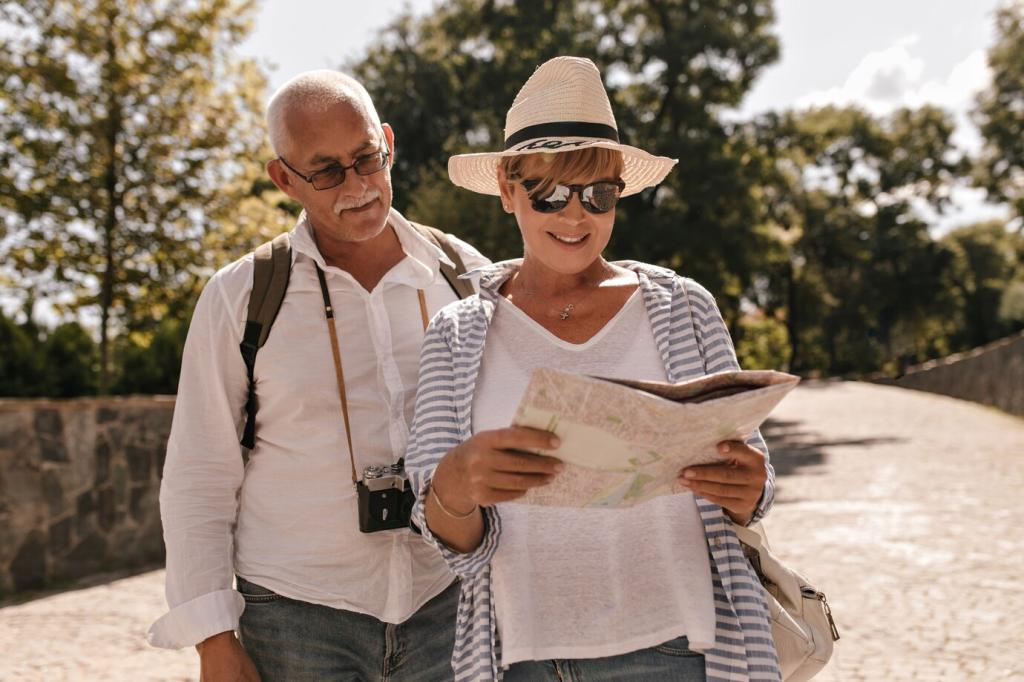
Pick a theme—waterfront industry, revolutionary pamphlets, city walls—and draw a loop that begins and ends at a transit stop. Loops prevent fatigue and reveal patterns when landmarks repeat like motifs in music, helping your memory organize what your feet discover.
Mapping Time: Design Your Personal Historical Walk
Start early for quiet photographs and birdsong, pause at noon for shade and stories, and finish with golden-hour facades. Journal timestamps alongside impressions so your next walk compares light, sound, and mood across seasons. Patterns will emerge like old inks coming clear.